
The California Court System is the largest state court system in the United States, serving over 39 million residents across 58 counties. It operates under the judicial branch of California’s state government and is responsible for interpreting and applying state laws. The system is structured into three main levels: trial courts, appellate courts, and the California Supreme Court. Each level has a specific role in ensuring justice is served fairly and efficiently. Unlike federal courts, which handle cases involving federal law or disputes between states, California courts deal with violations of state law, including criminal offenses, civil disputes, family matters, and probate issues. The system is designed to be accessible, transparent, and accountable to the public.
California’s judicial structure is decentralized, with each of the 58 counties operating its own Superior Court. These trial courts are the entry point for most legal cases and have broad jurisdiction over civil, criminal, family, probate, juvenile, and traffic matters. Above the trial courts are six Courts of Appeal, which review decisions from the Superior Courts when legal errors are alleged. At the top is the California Supreme Court, the state’s highest court, which has discretionary review over most cases and mandatory review in death penalty appeals. The system also includes specialized divisions such as small claims, family law, and juvenile courts, each with specific rules and procedures. Public access to court records, forms, and calendars is supported through online portals, self-help centers, and clerk offices.
Structure of the California Court System
The California Court System is organized into a three-tier hierarchy: trial courts, intermediate appellate courts, and the state’s highest court. This structure ensures that cases are heard first at the local level, with opportunities for review if legal mistakes are suspected. Each tier has distinct responsibilities and jurisdictional limits. The system is designed to handle a wide range of legal matters, from minor traffic violations to complex constitutional questions.
Superior Courts: The Trial Level
- There are 58 Superior Courts, one in each California county, making them the primary trial courts in the state.
- These courts have original jurisdiction over all civil cases (including contract disputes, personal injury, and family law), criminal cases (misdemeanors and felonies), probate matters, juvenile delinquency, and traffic violations.
- Small claims courts are divisions within Superior Courts and handle civil disputes involving $12,500 or less (as of 2024), with simplified procedures and no attorneys allowed.
- Each Superior Court is led by a presiding judge and supported by court clerks, commissioners, and administrative staff who manage filings, schedules, and public records.
Courts of Appeal: Intermediate Review
- California has six appellate districts, each covering a specific geographic region of the state: First (San Francisco), Second (Los Angeles), Third (Sacramento), Fourth (San Diego), Fifth (Fresno), and Sixth (San Jose).
- These courts review appeals from Superior Courts when a party claims a legal error affected the outcome, such as improper admission of evidence or incorrect jury instructions.
- Cases are heard by panels of three justices, and decisions require a majority vote. They may affirm, reverse, or modify the lower court’s ruling.
- Appellate courts do not conduct new trials or hear witness testimony; they review the trial record and written briefs submitted by attorneys.
California Supreme Court: The Highest Authority
- The California Supreme Court is the state’s court of last resort and consists of seven justices, including one Chief Justice.
- It has discretionary review over most cases, meaning it chooses which appeals to hear, typically those involving significant legal questions or conflicting rulings among appellate courts.
- The court must hear all appeals in death penalty cases from the Superior Courts, ensuring automatic review of capital convictions.
- Justices are appointed by the Governor and confirmed by voters in a retention election. They serve 12-year terms and may be reconfirmed.
- Decisions require at least four justices to agree and become binding precedent for all lower courts in California.
Types of Cases Handled by California Courts
California courts process a vast array of legal matters, each governed by specific statutes, rules, and procedures. The type of case determines which court has jurisdiction, what rules apply, and how the process unfolds. Understanding these categories helps individuals know where to file, what to expect, and how to prepare.
Civil Cases
- Civil cases involve disputes between individuals, businesses, or organizations over rights, money, or property. Examples include breach of contract, personal injury, landlord-tenant disputes, and employment claims.
- Cases involving $25,000 or less may be appealed to the appellate division of the Superior Court; larger civil cases go directly to the Courts of Appeal.
- Parties may represent themselves (pro se) or hire attorneys. The California Courts website provides free forms and guides for common civil actions.
- Civil trials may include juries, and judgments can result in monetary awards, injunctions, or other remedies.
Criminal Cases
- Criminal cases are brought by the state against individuals accused of violating California laws, ranging from infractions (like speeding) to misdemeanors (such as petty theft) and felonies (including robbery or murder).
- Misdemeanor convictions can result in fines, probation, or jail time up to one year; felonies may lead to state prison sentences.
- Defendants have the right to an attorney, a speedy trial, and the presumption of innocence. Most criminal cases are resolved through plea bargains.
- Appeals of misdemeanor convictions are heard by the appellate division of the Superior Court; felony appeals go to the Courts of Appeal.
Family Law Cases
- Family courts handle divorce, child custody, child support, spousal support, domestic violence restraining orders, and paternity disputes.
- These cases are filed in the Family Law Department of the local Superior Court and often involve mandatory mediation for custody issues.
- Self-represented litigants can use free forms and attend workshops at court self-help centers.
- Judges make decisions based on the best interests of the child and equitable distribution of assets.
Probate and Juvenile Cases
- Probate courts manage wills, estates, guardianships, and conservatorships. They ensure debts are paid, and assets are distributed according to law or the deceased’s wishes.
- Juvenile courts handle cases involving minors accused of crimes (delinquency) or who are abused, neglected, or dependent on the state.
- Juvenile proceedings are typically confidential and focus on rehabilitation rather than punishment.
- Both probate and juvenile cases are heard in specialized divisions of the Superior Court and have unique procedural rules.
How to Search for California Court Records
California provides public access to court records through official online portals, though availability varies by county and case type. Most Superior Courts offer electronic case lookup tools that allow users to search by party name, case number, or attorney. These systems display key details such as filing dates, hearing schedules, and case status. Some records, especially in juvenile or sealed cases, are not publicly accessible.
Using the California Courts Case Management Portal
- Go to the official California Courts website at https://www.courts.ca.gov.
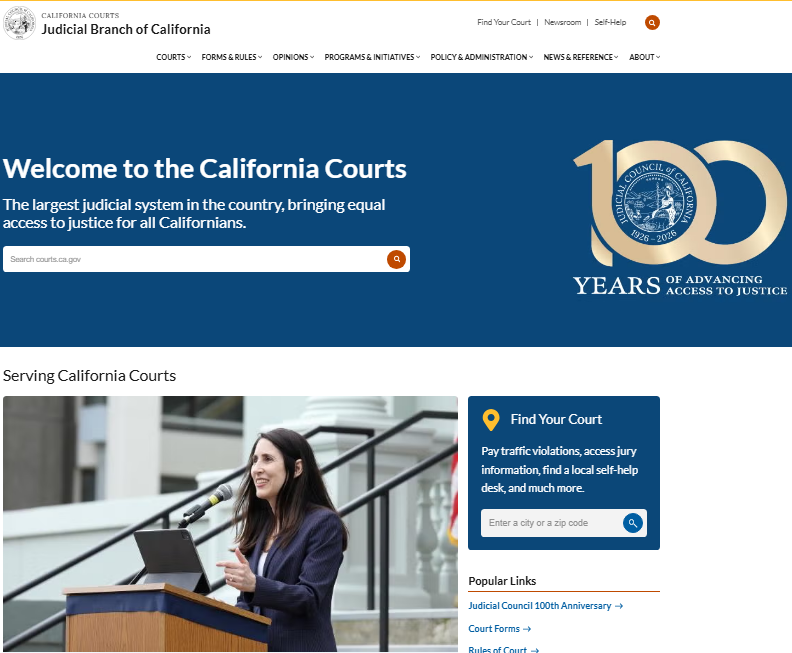
- Click on “Find Your Court” and select your county from the dropdown menu.
- On the county court’s homepage, look for a link labeled “Case Search,” “Online Docket,” or “Public Access.”
- Type the case number into the “Case Number” field. If unknown, enter the full name of a party in the “Party Name” field.
- Click the “Search” button. The system will return the case title, filing date, case type, current status, and upcoming hearing dates.
Searching Criminal Records via the California DOJ
- Visit the California Department of Justice RAP Sheet Request portal at https://oag.ca.gov/fingerprints.
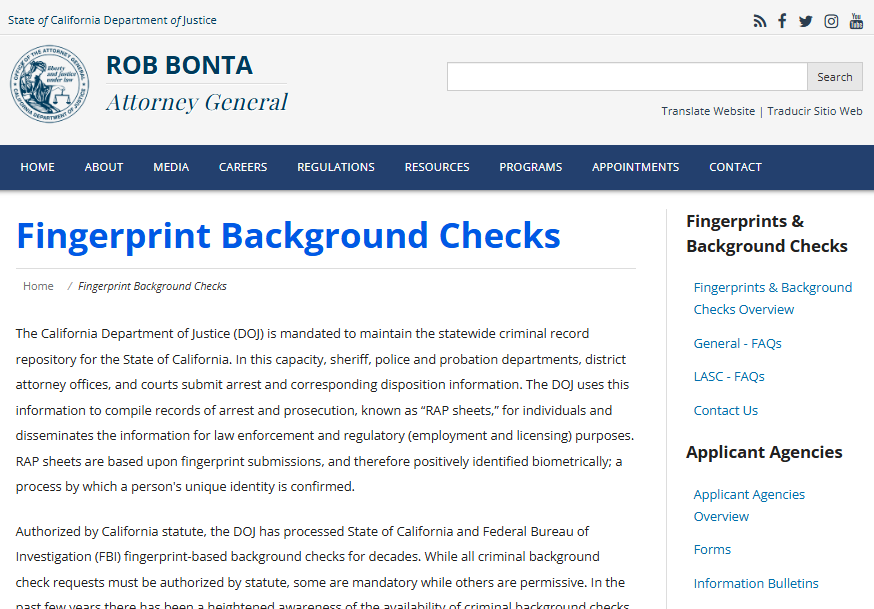
- Select “Request a Copy of Your Own Record” or “Request a Record for Someone Else” (requires authorization).
- Fill in the required fields: full legal name, date of birth, and last known address.
- Upload a fingerprint card or schedule an appointment at a Live Scan location.
- Pay the $25 fee online. Results include arrest dates, charge codes, court dispositions, and custody status.
Accessing Appellate Court Opinions
- Go to the California Courts Appellate Courts Opinions page at https://www.courts.ca.gov/opinions.htm.
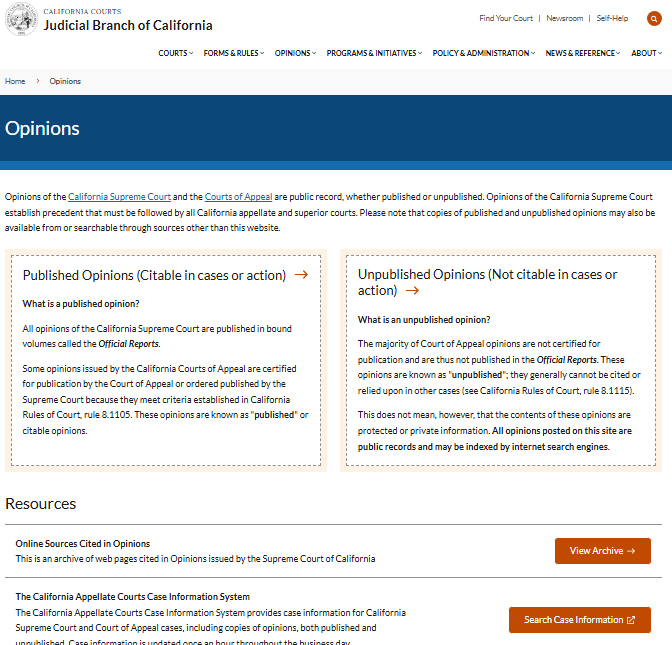
- Choose the appellate district (e.g., “Second District”) from the list.
- Enter keywords, case name, or docket number in the search box.
- Click “Search.” The system returns published opinions with case summaries, legal citations, and judge names.
- Unpublished opinions are not available online but may be requested from the court clerk for a fee.
California Court Online Services and Resources
The California Court System offers a range of digital tools to help the public file cases, pay fees, check calendars, and access legal information. These services reduce the need for in-person visits and improve efficiency. Most are available 24/7 through county court dockets websites or the statewide portal.
eFile California: Online Filing
- eFileCA allows attorneys and self-represented litigants to submit civil, family, and probate documents electronically in participating counties.
- Users must register for an account, upload PDFs, and pay filing fees via credit card or eCheck.
- Accepted file types include complaints, motions, and responses. Some documents require court approval before filing.
- Confirmation receipts are emailed immediately, and filings are processed within one business day.
Court Calendars and Hearing Schedules
- Most Superior Courts publish daily calendars online, showing time, courtroom, case number, and judge assigned.
- Calendars are updated in real time and can be filtered by department (e.g., criminal, family, civil).
- Users can sign up for email or text alerts when their case is scheduled or rescheduled.
- Remote appearances via Zoom are available for certain hearings, with links posted on the calendar.
Self-Help Centers and Legal Aid
- Every Superior Court operates a self-help center offering free legal information, forms, and workshops.
- Services include help with divorce paperwork, eviction defense, small claims filing, and restraining orders.
- Multilingual staff and interpreters are available in Spanish, Chinese, Vietnamese, and other languages.
- Low-income individuals may qualify for free legal representation through nonprofit legal aid organizations partnered with the courts.
California Court Rules and Procedures
All California courts follow the California Rules of Court, a comprehensive set of regulations governing case management, filings, hearings, and appeals. These rules ensure consistency across the state while allowing local courts to adopt supplemental procedures. Compliance is mandatory for attorneys and strongly recommended for self-represented parties.
Civil Procedure Rules
- Civil cases must be filed within statutory deadlines (statutes of limitations), such as two years for personal injury or four years for contract disputes.
- Parties must serve documents according to strict rules—personal delivery, mail, or publication—and file proof of service with the court.
- Discovery allows parties to exchange evidence through interrogatories, depositions, and document requests.
- Motions must be filed with a notice of hearing, supporting declaration, and memorandum of points and authorities.
Criminal Procedure Rules
- Arrests require probable cause, and suspects must be informed of their rights (Miranda warning).
- Felony cases begin with an arraignment, followed by a preliminary hearing or grand jury indictment.
- Plea negotiations are common, with over 90% of criminal cases resolved without trial.
- Trials must begin within 60 days for in-custody defendants or 30 days for misdemeanors, unless waived.
Appeals Process
- To appeal a Superior Court decision, the appellant must file a Notice of Appeal within 60 days of the judgment.
- The record on appeal includes transcripts, exhibits, and pleadings from the trial court.
- Appellate briefs must follow strict formatting rules and cite relevant case law and statutes.
- Oral arguments are scheduled if requested, and decisions are typically issued within 90 days of submission.
Filing Fees and Financial Assistance
Filing fees in California courts vary by case type and court level. Superior Courts charge between $435 and $495 for most civil filings, while small claims cases cost $30 to $75. Criminal filings are generally free for defendants. Fee waivers are available for low-income individuals who meet income guidelines.
Standard Filing Fees
| Case Type | Superior Court Fee | Court of Appeal Fee |
| Civil Lawsuit (over $25,000) | $435 | $825 |
| Family Law Petition (divorce) | $435 | $825 |
| Small Claims | $30–$75 | N/A |
| Probate Petition | $435 | $825 |
| Criminal Appeal | N/A | $825 |
Fee Waiver Process
- Complete Form FW-001 (Application for Waiver of Court Fees and Costs).
- Attach proof of income (pay stubs, tax returns, or benefits statement).
- File the form with the court clerk before or at the time of filing your case.
- The judge reviews the application and issues a ruling within 10 days.
- If approved, all filing, service, and copy fees are waived for the duration of the case.
Payment Options
- Fees can be paid online via credit card, debit card, or electronic check through the court’s payment portal.
- In-person payments are accepted at clerk offices using cash, check, or money order.
- Installment plans may be available for large fees, subject to court approval.
- Returned checks incur a $25 fee and may result in dismissal of the case.
Court Locations and Contact Information
California’s 58 Superior Courts are located in county seats and major cities, with some counties operating multiple branches. Each court has a public clerk’s office for filings, record requests, and general inquiries. Hours vary, but most are open Monday through Friday from 8:00 a.m. to 4:00 p.m., excluding holidays.
Finding Your Local Court
- Visit https://www.courts.ca.gov/.
- Enter your city, ZIP code, or county name in the search box.
- Select your court from the list to view address, phone number, website, and map.
- Click “Directions” for GPS navigation or public transit options.
Contacting the Clerk’s Office
- Clerk offices handle case filings, record requests, fee payments, and scheduling questions.
- Phone lines are staffed during business hours; after-hours inquiries can be submitted via online forms.
- Email addresses are available on each court’s website, but are not monitored for urgent legal matters.
- Walk-in services may require appointments for certain transactions, such as certified copies or name changes.
Statewide Court Administration
- The Judicial Council of California oversees policy, rules, and funding for all state courts.
- The Administrative Office of the Courts (AOC) supports operations, technology, and public education.
- Media inquiries and public records requests should be directed to the AOC Communications Office.
- For general information, call the California Courts Contact Center at (888) 767-6759.
| Office | Address | Phone | Hours |
| Judicial Council of California | 455 Golden Gate Avenue, San Francisco, CA 94102 | (415) 865-7000 | Mon–Fri, 8:00 a.m. – 5:00 p.m. |
| California Courts Contact Center | Online only | (888) 767-6759 | Mon–Fri, 8:00 a.m. – 4:30 p.m. |
| Los Angeles Superior Court (Central) | 111 North Hill Street, Los Angeles, CA 90012 | (213) 830-0803 | Mon–Fri, 8:00 a.m. – 4:00 p.m. |
(FAQs) About the California Court System
California court procedures can vary by county, case type, and filing method. Many residents search for information about case status, court dates, public records, appeals, and self-representation before visiting a courthouse or filing legal documents. The answers below explain how California courts typically handle these processes and what individuals should expect when using Superior Court services online or in person.
How do I check the status of my court case in California?
To check your case status, visit the official website of your county’s Superior Court and use the online case search tool. Most courts allow you to search by case number or party name. For example, in Los Angeles County, go to https://www.lacourt.org, click “Case Information,” then “Civil, Small Claims, Family Law, or Probate Case Access.” Enter your case number in the “Case Number” field and click “Search.” The system will display the case title, filing date, current status (e.g., active, dismissed, judgment entered), and upcoming hearing dates. If you don’t have the case number, use the “Party Name” search with your full legal name. Results are updated daily. For criminal cases, some counties require you to register for a free account to view details. Always verify information with the clerk’s office if accuracy is critical, as online data may lag by 24–48 hours.
Can I represent myself in a California court?
Yes, you can represent yourself in a California court, known as appearing “pro se.” This is allowed in all case types, including civil, family, small claims, and some criminal matters. However, corporations must be represented by an attorney. Self-represented litigants must follow the same rules as attorneys, including filing deadlines, formatting requirements, and courtroom procedures. The California Courts website offers free forms, step-by-step guides, and video tutorials for common actions like filing a divorce or responding to an eviction. Every Superior Court has a self-help center where staff can explain procedures and provide form packets, but they cannot give legal advice. For complex cases, such as probate or felony defense, consulting an attorney is strongly recommended. Failure to comply with court rules may result in dismissal of your case or default judgment.
How long does it take to get a court date in California?
The time to get a court date depends on the case type, court location, and current caseload. In civil cases, after filing and serving the complaint, the defendant has 30 days to respond. The plaintiff then requests a trial date, which may be set 90 to 180 days later, depending on court availability. Criminal cases move faster: misdemeanors typically go to trial within 30 days if the defendant is in custody, or 45 days if released. Felonies require a preliminary hearing within 10 court days of arraignment. Family law cases, such as divorce, may take 6 to 12 months due to mandatory waiting periods and settlement efforts. Small claims trials are usually scheduled within 60 to 90 days. Courts in urban areas like Los Angeles or San Diego may have longer delays due to high volume. You can check your hearing schedule online or by calling the clerk’s office.
Are California court records public?
Most California court records are public under the California Public Records Act and the First Amendment. This includes civil, criminal, family, and probate case files, unless sealed by court order. However, certain records are restricted, such as juvenile delinquency files, adoption records, and cases involving sealed settlements. Additionally, personal information like Social Security numbers, bank account details, and home addresses must be redacted before release. To access records, use the online case search tool on your county court’s website or visit the clerk’s office in person. Certified copies cost $25 to $40 per document. Some courts charge search fees if staff assistance is required. Appellate opinions are published online at https://www.courts.ca.gov/. If a record is denied, you may file a petition for access under California Rules of Court, rule 2.550.
How do I appeal a decision from a California Superior Court?
To appeal a Superior Court decision, you must file a Notice of Appeal within 60 days of the entry of judgment. This deadline is strict and cannot be extended. Obtain Form APP-101 from the court clerk or download it from the California Courts website. Complete the form with the case number, parties’ names, and the judgment being appealed. File the original with the Superior Court clerk and serve a copy on all other parties. Pay the $825 filing fee or submit a fee waiver if eligible. The court will prepare the record on appeal, including transcripts and exhibits. Your attorney (or you, if pro se) must then file an opening brief within 40 days, followed by a respondent’s brief and a reply brief. The Court of Appeal will review the record and issue a written decision, which may affirm, reverse, or remand the case. Oral argument is optional and granted at the court’s discretion.